Muscle fatigue and workload
An MSD shows up when the load placed on the body repeatedly goes beyond its ability to recover.
What increases the load
- Force, repeated movements, long hours
- Awkward postures, vibrations
- Cold, stress, high pace
What restores capacity
- Enough good-quality sleep
- Hydration, food, physical activity
- Breaks, stress management
Sensing the effort: the rating of perceived exertion
The same force can feel like a very different effort from one person to the next. The rating of perceived exertion (also called the Borg scale) helps you put a number on what your body feels, from 0 (no effort) to 10 (maximum effort).
The consequences of muscle fatigue
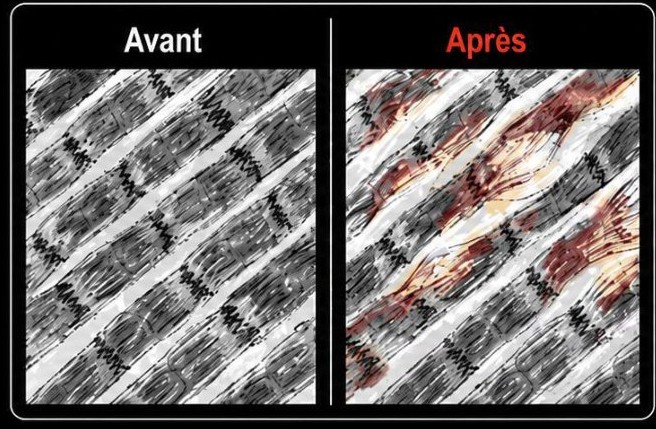
When it's used over and over without recovery, the muscle wears out. Three consequences follow one after another:
Muscle work: dynamic or static
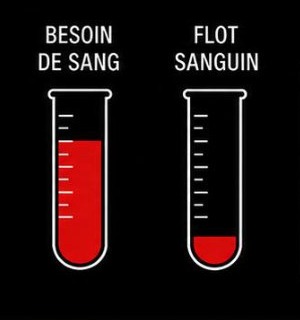
The muscle needs blood to work. When the contraction is held, blood flow drops. Compare the two:
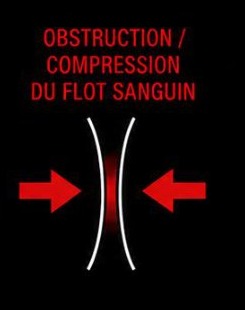
- The muscle stays contracted.
- Blood flow is squeezed.
- Fatigue comes faster.
- The risk of pain goes up.
Good blood supply: oxygen and nutrients reach the muscle.
Reduced blood supply: less oxygen, fewer nutrients.
-
Starved of blood, the muscle runs short on oxygen and fuel. It contracts less well and tires out much faster, even for a moderate effort.
-
The constant tension and lack of blood flow wake up the muscle's pain sensors: it pulls, burns or throbs. It's the first warning sign.
-
With no circulation to flush them out, the waste from the effort (lactic acid, ions) builds up in the muscle. It keeps the fatigue and the tissue irritation going.
-
Small areas of the muscle stay knotted up and contracted. Tender to the touch, they can send pain elsewhere in the body (referred pain).
-
The muscle ends up staying clenched all the time, painful at the slightest touch. By this stage, rest alone isn't always enough to release it.
Ref.: Baillargeon et Patry, 2003; CCOHS; INRS.
Staying frozen, sitting or standing, tires you out too: change position every 20 to 30 minutes.
Prolonged sitting work
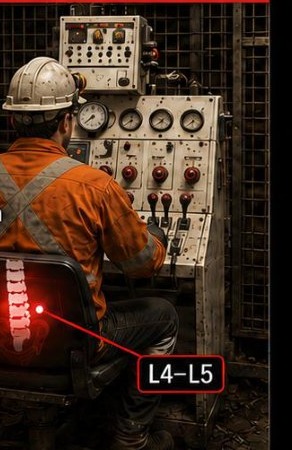
Even when you're sitting, your muscles work statically to hold you in position. Sitting for a long time tires the body and increases the pressure on the discs in your lower back.
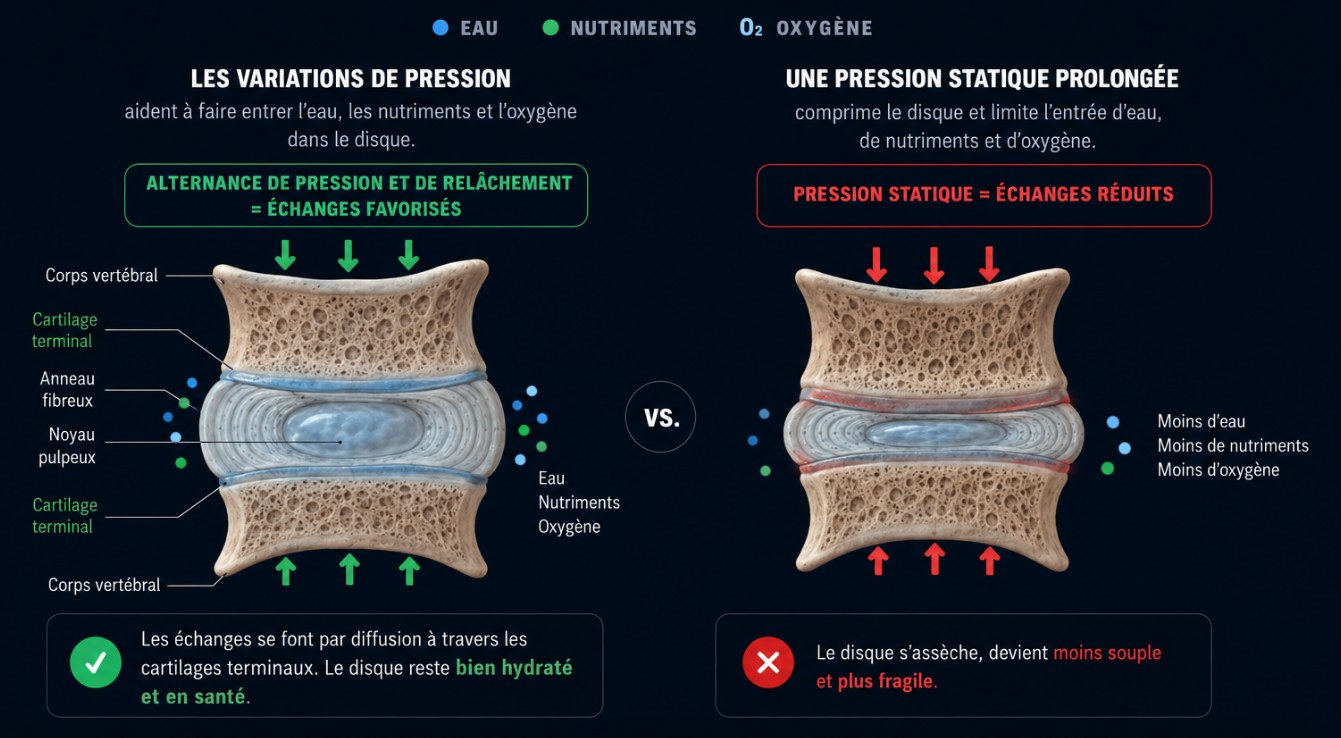
Pressure changes
help bring water, nutrients and oxygen into the disc.
Prolonged static pressure
squeezes the disc and limits how much water, nutrients and oxygen get in.
 Enlarge
Discs feed on movement: varying the pressure draws in water, nutrients and oxygen; prolonged static pressure starves them.
Moving often helps protect the discs in your lower back.
Control measures
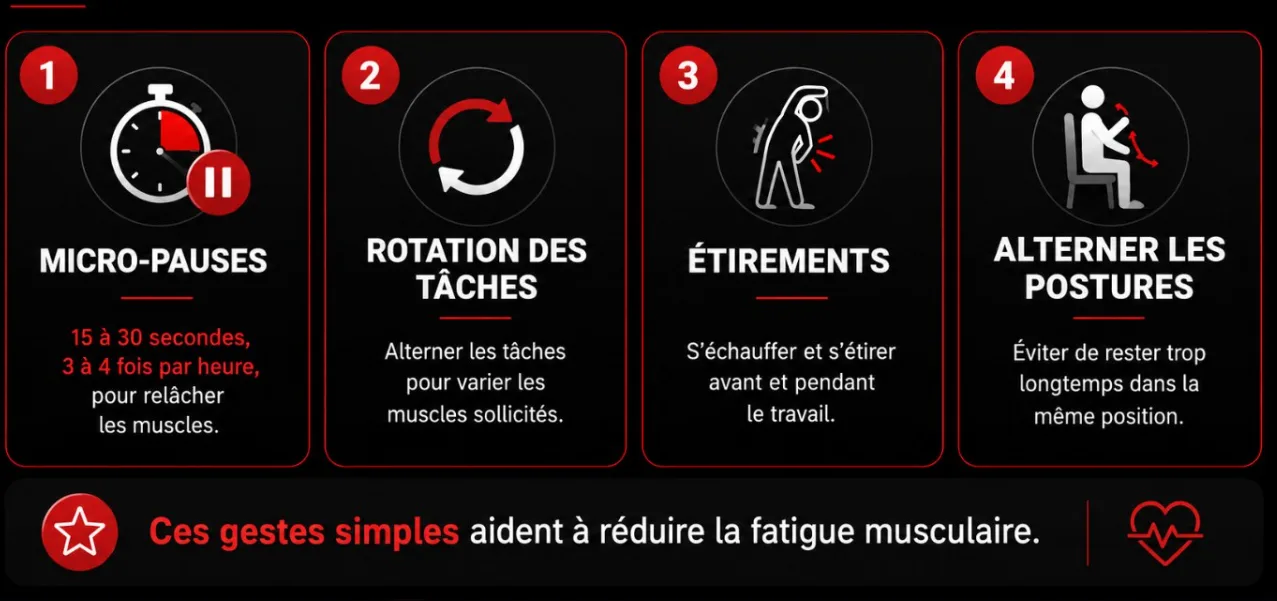
Simple moves to limit muscle fatigue and recover through the day.
 Enlarge
Micro-breaks
15 to 30 seconds, 3 to 4 times an hour, to relax the muscles.
Task rotation
Switch tasks to vary the muscles you use.
Stretching
Warm up and stretch before and during work.
Switch postures
Avoid staying too long in the same position.